
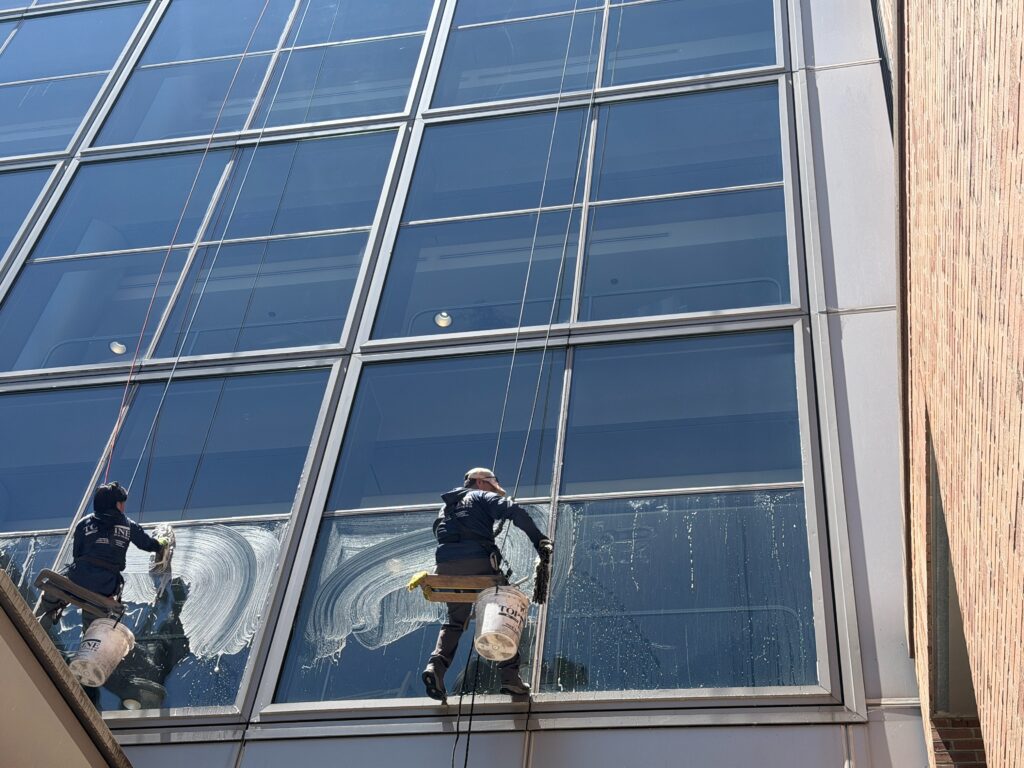
A commercial window cleaning visit is easier to coordinate when the property team and contractor agree on the work, access and responsibilities before the crew arrives. Use this checklist to prepare an occupied building, coordinate the service and review the completed work.
It is designed for property and facility managers in Northern Virginia, Washington, D.C. and Maryland. Suspended-access areas need additional planning, even when the building is not a high-rise.
Quick Answer: Confirm the exact glass surfaces, exclusions, access arrangements, schedule, occupant notices, required documentation and completion review. Assign a property contact and a contractor contact. Record changes in writing, and separate routine cleaning from additional work that has not been approved.
Your Commercial Window Cleaning Checklist at a Glance
Use these three stages to organize the visit. The detailed checkpoints below explain what to confirm and what to record.
| Stage | Confirm | Keep on File |
|---|---|---|
| Before service | Scope, access, schedule, notices and required documents | Approved scope and pre-service checklist |
| During service | Check-in, work areas, communication and approved changes | Progress notes and exceptions |
| After service | Completed areas, outstanding items and follow-up | Completion record and next steps |
Before Service: Confirm Scope, Access and Responsibilities
1. Define Exactly What Is Included
Describe the glass by building, floor, elevation or room. A marked photograph or window list can help everyone use the same location references.
- Confirm interior, exterior or both sides of each area.
- List entrance doors, storefronts, lobby glass, partitions and other requested surfaces.
- State whether frames, sills, tracks and screens are included, excluded or separately priced.
- Separate routine cleaning from construction-residue removal, mineral-deposit treatment or restoration unless those tasks are specifically included.
Record visible pre-existing conditions and agreed exclusions. The written scope, not a general service description, should define the visit.
2. Confirm Access and Site Logistics
- Identify the person responsible for doors, keys, badges, escorts and restricted areas.
- Confirm parking, unloading, equipment routes and any required water access with the contractor.
- Assign responsibility for moving furniture, displays, blinds and removable screens where needed.
Accessible storefronts, lobbies and low-rise glass belong under our commercial window cleaning service. Flag any area that needs a separate access review rather than assuming it is reachable.
3. Flag Suspended-Access Areas Early
Identify upper-level glass, atriums, setbacks or other areas the contractor needs to assess. Share existing building drawings, roof-access information and relevant anchorage records through an approved channel. Do not send untrained staff onto roofs to collect photographs or inspect equipment.
For rope descent systems, the building owner must provide the employer with the written anchorage information required by OSHA 29 CFR 1910.27(b)(1) before use. The employer must obtain that information before employees use the anchorage and keep it for the duration of the job.
Use our High-Rise Window Cleaning Safety & Access Guide for the detailed requirements. Projects requiring suspended access are handled through our high-rise and rope-descent window cleaning service.
4. Coordinate the Schedule and Occupant Notice
- Agree on the arrival window, work sequence and operating restrictions.
- Tell occupants which areas are affected, what they need to move and whom to contact.
- Identify sensitive rooms, business events, deliveries and other scheduled contractors.
- Agree on a rescheduling and notification process if site or weather conditions prevent work.
Follow the property’s notice and access rules. Confirm after-hours arrangements rather than assuming they are available.
5. Confirm Documents and Points of Contact
Request project-required insurance documents, relevant training records and site-specific safety information during scheduling. Track what is received, what is pending and who will follow up. Our Safety & Compliance page explains the types of documentation that may apply.
Record the property contact, contractor lead and authorized change approver. Confirm how the crew will reach the property team during the visit.
During Service: Keep the Work Coordinated
6. Confirm Check-In and Work Areas
At arrival, review access arrangements, occupied areas and any changes since the walkthrough. Coordinate entrances, pedestrian routes and work zones with the contractor. Maintain required exit access, and report conflicts rather than moving barriers or equipment yourself.
For larger properties, use the same floor or elevation references from the scope to track progress. Do not enter a restricted work area to check a window.
7. Record Changes and Exceptions
Keep a short record of inaccessible rooms, blocked windows, changed schedules and requested extras. Identify the location, reason, responsible contact and next action.
Approve scope or price changes through the agreed process before extra work begins. Where photographs are permitted, avoid capturing occupants, confidential material or restricted facility details.
After Service: Review and Close Out the Visit
8. Compare the Work with the Approved Scope
- Review the agreed areas from safe, authorized locations with the contractor.
- Identify missed areas or touch-ups separately from exclusions and documented pre-existing conditions.
- Record any return visit, responsible contact and agreed follow-up date.
- Confirm that temporary work areas are released and property access is restored.
Keep the service date, completed areas, outstanding items and authorized reviewer with the job record. Use the agreed acceptance criteria rather than adding requirements at closeout.
For the next visit, review the building’s actual needs instead of assigning every glass surface the same interval. Our guide to how often commercial building windows should be cleaned covers scheduling considerations.
Frequently Asked Questions
Are screens, tracks and frames automatically included?
No. Specify them in the written scope. Also confirm who removes and reinstalls screens or moves items that block access.
Can the building stay open during window cleaning?
Discuss this during the site review. The plan may use sections, controlled work areas or different service times. Do not assume every entrance or room can remain available throughout the visit.
How far in advance should tenants be notified?
Use your property’s policies and any applicable lease or access requirements. Agree on the notice deadline during scheduling, and explain how occupants will receive updates if plans change.
Does this checklist replace a safety plan?
No. It is a coordination tool for property teams. It does not replace a site-specific hazard assessment, applicable requirements, manufacturer instructions or qualified-person determinations.
Planning Your Next Commercial Window Cleaning?
Send the property address, requested glass areas, interior or exterior scope, preferred schedule and available photos. Top of the Line Services will review the information and discuss the next steps for your property.
Request a Commercial Window Cleaning Estimate
Prefer to call? (703) 730-6100